Voices Unsilenced: How a List Poem Becomes a Powerful Storyboard
The latest activity, where the learners created Storyboards based on a List Poem, is a profound exercise in self-expression and community advocacy. This approach, which moves from individual thoughts to a powerful collective visual statement, is key to developing media literacy and voice.
BLOG POSTS
Henry Sempangi Sanyulye
11/13/20252 min read
The Power of the List Poem
The activity started with a structured List Poem format , requiring each learner to complete six specific sentence starters:
People say I...
Sometimes I struggle to...
I wish I could speak to/for...
I create...
My community is...
We can change...
By filling these out, the young people explored their public identity, their private struggles, their aspirations, their creative role, their perception of their community, and their hopes for the future.
From Words to Visual Storytelling
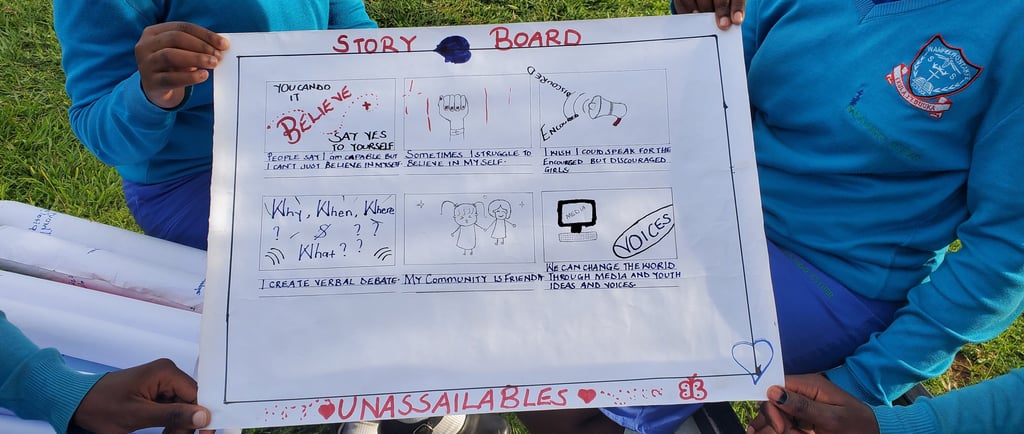
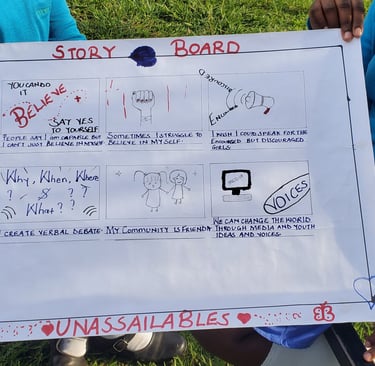
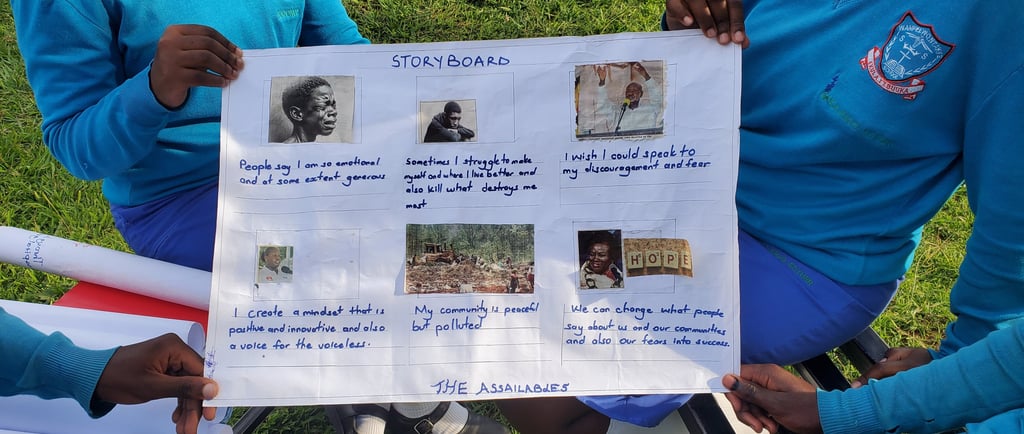
The real power emerged when the small groups combined their individual poems to create one collective piece. They then transformed this collective poem into a visual display using a Storyboard a flip chart with six squares.
This stepfinding or drawing images to represent their group's final poem —is where their message gained monumental impact.
The "ASSALLABLES" team paired statements like, "My community is peaceful but polluted" with an image of environmental destruction, and "We can change what people say about us... into success" with a collage of "HOPE."
The "UNASSAILABLES" team used drawings to illustrate their personal challenges ("Sometimes I struggle to just believe in myself") and their commitment to others ("I wish I could speak for the encouraged but discouraged girls").
A Personal Reflection on True Voice
The shift from the abstract (a feeling or a struggle) to the concrete (a poem and an image) is what makes this activity truly transformative. They didn't just write about themselves; they created a public declaration.
These students, through the disciplined format of the List Poem and the compelling visuals of the Storyboard, practiced blending the personal with the political. They learned how to articulate their vulnerabilities and their strengths, not just for themselves, but as a collective voice for their community. By making a visual piece that had "everyone represented", they didn't just make art; they cultivated a sense of shared destiny and mutual encouragement. This is the essence of media creation for impact—it's about finding the courage to speak and the skills to ensure you are heard.
Contact
Get in touch
Follow
Support
+256 776847748
© 2025. All rights reserved.